This is a demo store. No orders will be fulfilled.
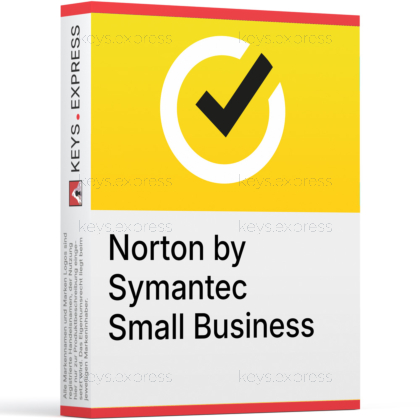
What are the key benefits of Norton by Symantec Small Business?
Business security – Protects small business devices from modern threats.
Multi-device – Secures PCs, Macs, smartphones and tablets together.
Cloud backup – Helps safeguard business data with online backups.
Password manager – Stores employee credentials in encrypted password vault.
Easy management – Simple web portal to invite and manage users.
Trusted brand– Long-established vendor regularly tested by labs.
Download: Norton by Symantec Small Business
Norton by Symantec Small Business is a subscription-based cybersecurity service designed to protect the devices and data of small companies that need strong protection without enterprise complexity. :contentReference[oaicite:0]{index=0}
Protects small businesses rather than home users or large enterprises.
Built for companies with a limited number of employees and endpoints.
Combines antivirus, firewall and data protection in one subscription.
Targets organizations that want a straightforward, low-overhead security solution.
It combines real-time device security with firewall protection, cloud backup, password management and a private browser, and in higher tiers adds VPN and other extras. :contentReference[oaicite:1]{index=1}
24/7 real-time antivirus and anti-malware scanning for endpoints.
Smart firewall to help block unwanted network traffic and intrusions.
Cloud backup with defined storage quotas for critical business files.
Password manager to store and sync complex credentials for staff accounts.
Secure or private browser to help isolate risky websites and scripts.
Premium plans add secure VPN and driver updater functionality.
Norton by Symantec Small Business is licensed and designed for commercial use with business-focused protections, while Norton 360 targets consumers and families with broader privacy and identity features but is not intended for business devices. :contentReference[oaicite:2]{index=2}
Small Business is explicitly positioned for small companies and their endpoints.
Norton 360 is marketed to individuals and households, not corporate fleets.
Business edition emphasizes device protection, data safety and simple admin.
Norton 360 bundles more consumer privacy tools and identity monitoring options.
Licensing terms for Small Business reflect commercial, multi-user deployments.
Norton by Symantec Small Business focuses on easy deployment and bundled features for small teams, whereas enterprise suites such as Symantec Endpoint Security offer deeper policy control, centralized management and broader integration for large organizations. :contentReference[oaicite:3]{index=3}
Small Business emphasizes simplicity over granular enterprise policy controls.
Enterprise suites provide advanced consoles, reporting and integration with SIEM tools.
Norton Small Business is usually simpler to buy, deploy and maintain.
Enterprise products are better suited for hundreds or thousands of endpoints.
Reviewers often highlight feature richness for Small Business but stronger admin tools in enterprise lines.
A secure VPN is included only in the premium tier of Norton Small Business, while the standard package focuses on device protection without VPN. :contentReference[oaicite:4]{index=4}
Standard Small Business plan omits VPN connectivity by default.
Premium version adds secure VPN to help protect employee web traffic.
Both tiers retain core antivirus, firewall and backup capabilities.
Choosing between standard and premium depends on your privacy requirements.
Yes, it is built to protect multiple device types, including Windows PCs, Macs and mobile devices, under a single small-business subscription. :contentReference[oaicite:5]{index=5}
Supports protection for Windows desktops and laptops used in the office.
Covers macOS systems, which many creative and management teams rely on.
Extends security to Android and iOS smartphones and tablets for mobile staff.
Licenses can be reassigned as employees and devices change over time.
It is managed mainly through a simple online portal, where you assign licenses and send installation links, rather than through a full-blown enterprise management console. :contentReference[oaicite:6]{index=6}
Admins log into a web dashboard to see device status and seats.
From the portal, they email or share install links with employees.
There is no heavy, on-premises management server to maintain.
Best suited for organizations that do not need complex, policy-driven control.
Employees can contact Norton support directly for many troubleshooting issues.
Most reviewers find its performance impact acceptable for typical small-business workloads, although like any full security suite it can be heavier on older or low-spec machines. :contentReference[oaicite:7]{index=7}
Modern PCs and laptops usually handle it without noticeable slowdowns.
Older hardware with limited RAM or spinning disks may feel more overhead.
Cloud-based features shift some work away from local devices.
Admins often test on a few representative systems before full rollout.
Feedback from IT admins and review platforms generally highlights Norton Small Business as a feature-rich, easy-to-use solution for small organizations, with criticism mainly around limited enterprise-grade controls and pricing versus some competitors. :contentReference[oaicite:8]{index=8}
Positively rated for strong endpoint protection in independent tests.
Appreciated for bundling backup, password management and browser protections.
Admins like the straightforward licensing and simple user onboarding.
Some wish for more granular centralized management and tuning options.
Pricing and support are acceptable for many, but not always best-in-class.
For most businesses with multiple employees and devices, Norton by Symantec Small Business is a better fit than a patchwork of consumer antivirus licenses, because it offers commercial licensing, business-focused features and a single management point. :contentReference[oaicite:9]{index=9}
Designed and licensed specifically for commercial use scenarios.
Reduces compliance issues from using consumer products on business machines.
Easier to see protected devices and manage seats centrally.
Bundles several tools that businesses would otherwise buy separately.
Aligns better with insurance and cybersecurity policy expectations for companies.